Enhance Cable Organization with a Wire Mesh Cable Ladder System
Release time:2026-02-12 Click:7
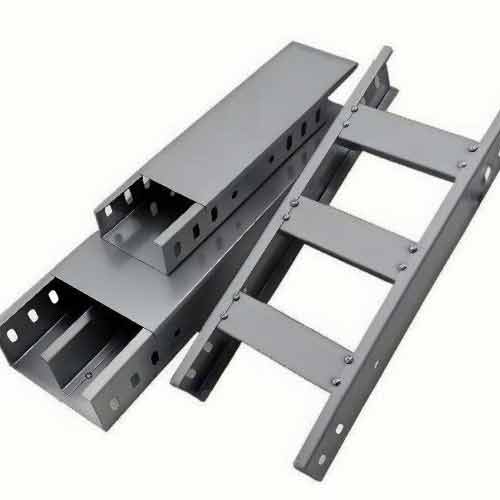
In modern buildings and industrial facilities, managing vast networks of cables—electrical, data, and communication—requires a system that combines strength, accessibility, and scalability, and the wire mesh cable ladder system delivers on all counts. Designed to support and organize cables along walls, ceilings, or overhead pathways, this system uses welded or woven steel mesh trays to create a robust, ventilated structure that prevents overheating and simplifies maintenance. Its adaptability makes it indispensable for data centers, factories, and commercial complexes where cable chaos can hinder efficiency and safety.
Structural integrity is built on durable materials. Cable ladders are typically fabricated from galvanized steel, stainless steel, or aluminum, chosen for their load-bearing capacity and corrosion resistance. Galvanized steel, with a zinc coating of 275–300 g/m2, withstands harsh indoor environments, while stainless steel (grades 304/316) excels in humid or chemically aggressive spaces. Aluminum variants, lightweight yet strong, are ideal for overhead installations where weight is a concern. The mesh design—with apertures of 25–100 mm—supports cables of varying diameters while allowing airflow to dissipate heat.
Organization and accessibility redefine cable management. The ladder’s rungs (horizontal supports) are spaced 150–300 mm apart, providing tiered levels for routing power, data, and fiber-optic cables separately, reducing electromagnetic interference. Removable side panels or hinged covers protect cables from dust and accidental damage, while integrated cable ties and clips secure bundles in place. For complex layouts, 90-degree bends, tees, and risers enable seamless routing around obstacles, maintaining a tidy appearance even in congested areas.
Heat dissipation and safety are critical advantages. Unlike closed conduit systems, the open mesh allows hot air to escape, preventing cable insulation from degrading—a major concern in high-density data centers where overheating can cause outages. The tray’s load capacity (up to 500 kg/m for galvanized steel) ensures it can support heavy bundles, including armored cables or bundled fiber optics. Fire-resistant coatings or intumescent strips can be added to slow flame spread, meeting building code requirements for fire safety.
Scalability and ease of installation streamline projects. Modular components—ladders, connectors, and brackets—are lightweight and interconnect with simple bolts or clamps, reducing installation time and labor costs. Extensions or reconfigurations are straightforward, allowing the system to grow with evolving network needs. For retrofits, the ladder can be mounted on existing structures without major modifications, minimizing downtime during upgrades.
Wire mesh cable ladder systems exemplify intelligent infrastructure, transforming cable management from a cluttered necessity to an organized, efficient system. By enhancing accessibility, safety, and thermal performance, they empower facilities to operate reliably and adapt to technological advancements with ease.
Previous article:Streamlining Cable Management with Perforated Cable Basket
Next article:The Role of Fiberglass Cable Tray in Electrical Infrastructure
Hot products
Mobile: +86 15369215227
Email:metalproducts2022@163.com
Email:1626757181@qq.com