Product details description
Cable ladder and cable tray systems are essential for organizing,
supporting, and protecting electrical cables in industrial, commercial, and
infrastructure projects. While both serve the same primary purpose, they have
distinct designs, features, and applications that make them suitable for
different scenarios. Choosing between cable ladder and cable tray requires a
thorough understanding of their differences, as well as a detailed cost-benefit
analysis that considers factors such as installation costs, maintenance
requirements, load capacity, and compatibility with the project’s specific
needs. Making the right selection ensures efficient cable management, reduces
the risk of cable damage, and optimizes long-term operational costs.
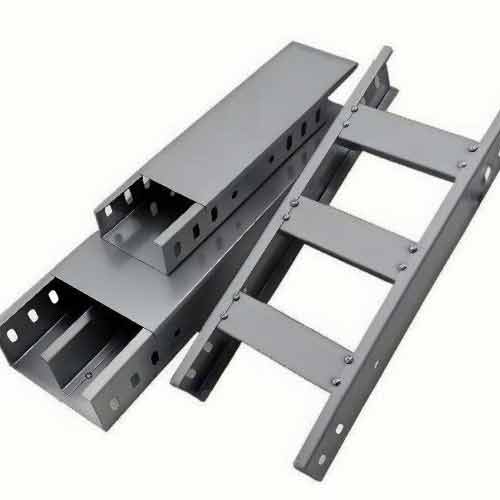
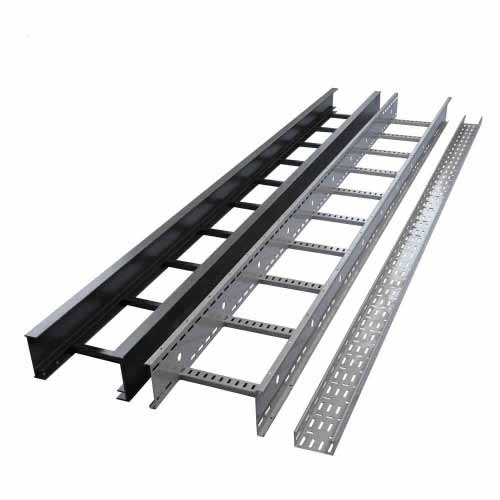
Cable ladders are characterized by their open, rung-like design, which
consists of two side rails connected by rungs spaced at regular intervals. This
open design provides excellent ventilation for cables, preventing overheating,
and allows for easy access to cables for installation, inspection, and
maintenance. Cable ladders are designed to handle heavy loads, making them ideal
for supporting large, heavy cables (such as power cables) and multiple cable
runs. They are commonly used in industrial settings, power plants, and high-rise
buildings where heavy cable loads and frequent maintenance are expected.
Additionally, the open design makes cable ladders suitable for outdoor
applications, as they allow water and debris to drain freely, reducing the risk
of corrosion and cable damage.
Cable trays, by contrast, have a solid or perforated base with side rails,
providing a more enclosed environment for cables. Perforated cable trays offer
partial ventilation, while solid-bottom trays provide full protection against
dust, debris, and moisture, making them suitable for indoor applications where
cable protection is a priority. Cable trays are lighter than cable ladders and
are designed for lighter cable loads, such as communication cables, data cables,
and small power cables. They are commonly used in commercial buildings, data
centers, and office spaces, where aesthetics and cable protection are more
important than heavy load capacity. Cable trays are also easier to install in
tight spaces due to their lighter weight and more compact design.
Cost-benefit analysis is a critical step in comparing cable ladder and
cable tray systems. Initial installation costs for cable ladders are typically
higher than for cable trays, due to their heavier construction and the need for
more robust support structures. However, cable ladders have a longer lifespan
and lower maintenance costs, as their open design reduces the buildup of dust
and debris and allows for easy maintenance. Cable trays have lower initial costs
but may require more frequent maintenance in dusty or harsh environments, as
debris can accumulate on the solid or perforated base. Additionally, the load
capacity of cable ladders means they can support more cables per unit length,
potentially reducing the number of systems needed and lowering long-term costs
for large-scale projects.
Application selection between cable ladder and cable tray depends on the
project’s specific requirements. For heavy cable loads, outdoor applications, or
projects requiring frequent maintenance, cable ladders are the preferred choice.
For lighter cable loads, indoor applications, or projects where aesthetics and
cable protection are prioritized, cable trays are more suitable. When conducting
a cost-benefit analysis, it is important to consider not just initial
installation costs but also long-term maintenance costs, lifespan, and the
potential for future expansion. By carefully evaluating these factors, engineers
and project managers can select the cable management system that provides the
best balance of performance, reliability, and cost-effectiveness for their
specific project.
Previous article:
Cable Ladder Height Adjustments: Vertical Routing and Multi-Level Installation Planning
Next article:no more