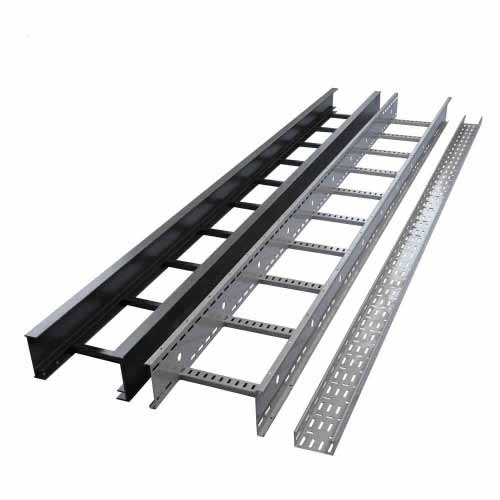
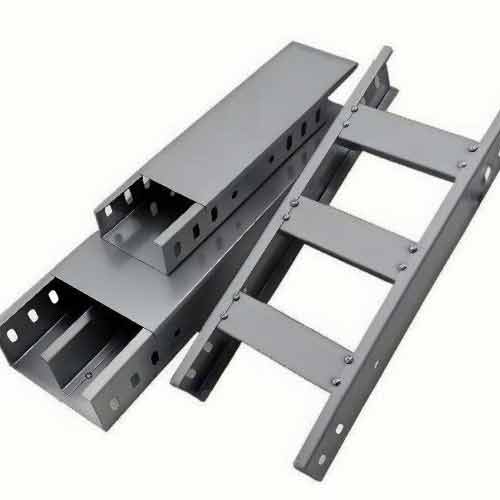
Product details description
Cable ladder systems are versatile overhead cable management solutions used
in data centers, industrial plants, telecommunications hubs, and commercial
buildings to organize, support, and route electrical and data cables vertically
and horizontally. Height adjustments play a pivotal role in optimizing vertical
routing paths, accommodating ceiling obstructions, aligning with equipment
racks, and ensuring ergonomic access for maintenance personnel. Modular ladder
sections with adjustable mounting brackets allow installers to precisely
configure elevation levels without custom fabrication, saving time and reducing
material waste.
Planning multi-level installations requires careful coordination between
structural engineers, MEP (mechanical, electrical, plumbing) designers, and
facility managers. Vertical runs must account for fire-rated penetrations,
seismic bracing, and load distribution across multiple support points.
Adjustable height features enable seamless integration with existing
infrastructure such as HVAC ducts, lighting fixtures, or sprinkler systems,
minimizing conflicts during retrofit projects. In high-rise buildings, staggered
ladder tiers may be employed to separate power and data cables, reducing
electromagnetic interference (EMI) and simplifying troubleshooting during
outages.
Load capacity and deflection limits are governed by ANSI/TIA-569-C and
EIA-310-D standards, which specify maximum spans, allowable bending moments, and
safety factors based on ladder width, rung spacing, and material gauge.
Height-adjustable brackets often incorporate locking mechanisms or
anti-vibration dampers to stabilize ladders under dynamic loads caused by cable
pulling or ambient vibrations. For heavy-duty applications involving fiber optic
bundles or high-voltage feeders, reinforced ladder sections with increased rung
thickness or double-sided supports may be required to prevent sagging or
structural failure.
Digital modeling tools and BIM (Building Information Modeling) software
streamline height adjustment planning by visualizing spatial relationships,
clash detection, and load simulations before physical installation. Real-time
collaboration platforms allow stakeholders to adjust ladder elevations remotely,
approve changes digitally, and generate accurate bills of materials.
Post-installation, regular inspections verify bracket integrity, bolt tightness,
and cable tension to prevent misalignment or collapse. As smart buildings adopt
IoT-enabled monitoring, future cable ladders may integrate strain gauges or RFID
tags to alert maintenance teams of excessive load or positional drift,
transforming passive infrastructure into intelligent, self-monitoring
systems.
Previous article:
Cable Ladder Cutting and Fabrication: Field Modifications and Custom Length Solutions
Next article:
Cable Ladder vs Cable Tray Comparison: Application Selection and Cost-Benefit Analysis