Product details description
Cable ladders are vital for routing and supporting cables in industrial and
commercial buildings, and proper installation ensures safety and longevity. The
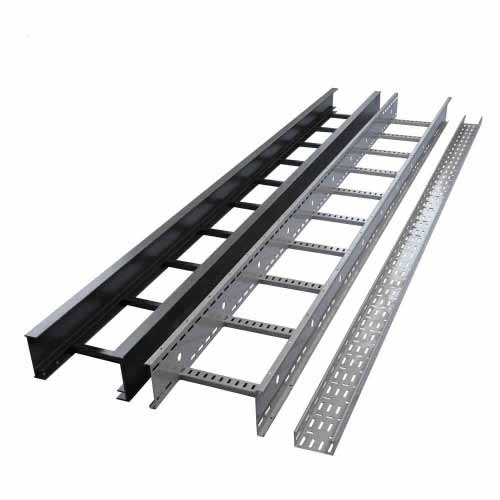
first key factor is spacing between rungs: rungs must be close enough to support
cables without allowing sagging, typically 200–300 mm for most applications.
Adequate spacing prevents excessive bending stress on cables while allowing
efficient heat dissipation.
Second is support interval, or the distance between suspension points along
the ladder length. This depends on ladder material and load; steel ladders can
span longer distances (up to 3 meters) than aluminum, but heavier cable loads
require closer supports to prevent deflection. Engineering calculations or
manufacturer tables help determine optimum intervals to avoid undue strain.
Third is load capacity and distribution: account for total cable weight
plus any additional forces such as vibration or thermal expansion. Evenly
distribute cables and avoid concentrating weight at one section, which could
cause localized deformation or failure.
Fourth is environmental considerations: outdoor installations or corrosive
atmospheres demand ladders made from galvanized steel, stainless steel, or
aluminum with protective coatings. UV-resistant paints and seals protect against
sun damage. In explosive environments, ladders must meet ATEX or IECEx standards
to prevent ignition risks.
Fifth is alignment and grounding: ladders must be level and securely
anchored to prevent shifting. Proper grounding safeguards against electrical
faults. Attention to these five factors ensures a robust, code-compliant cable
management system that performs reliably over time.
Previous article:
Cable Ladder vs Tray - Choosing the Right Cable Support
Next article:
How to Prevent Cable Damage in Ladders: Avoiding Overloading, Abrasion, and Water Ingress