Product details description
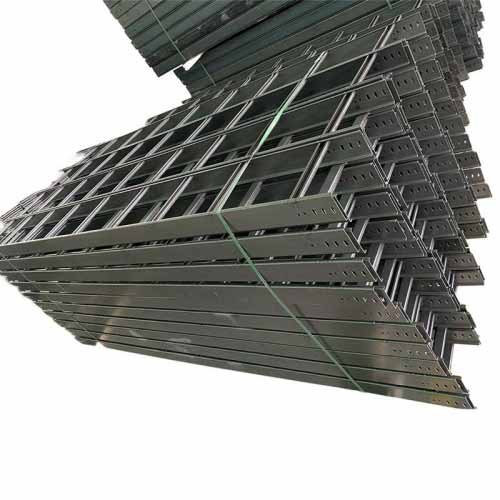
Cable ladder and tray systems represent essential infrastructure components
for electrical and data cable management, providing organized routing solutions
while ensuring proper cable support, protection, and accessibility for
maintenance operations in commercial, industrial, and institutional facilities.
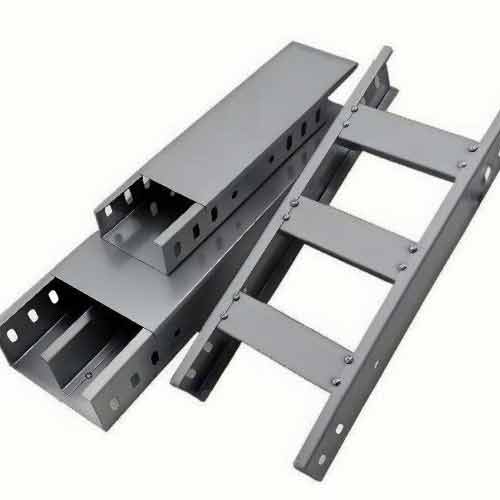
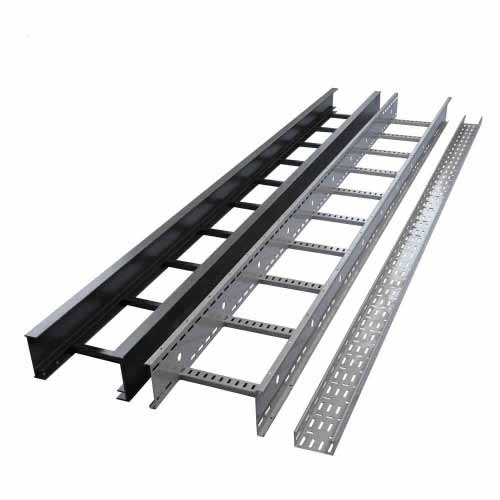
Cable ladder systems utilize ASTM A36 structural steel construction with minimum
yield strength of 36,000 PSI, featuring side rails connected by rungs spaced at
6-inch or 9-inch centers, creating an open framework that provides maximum cable
ventilation and easy access for installation and maintenance. The ladder
construction accommodates heavy cable loads up to 50 lbs per linear foot with
maximum spans of 20 feet between supports, utilizing 12-gauge steel rungs with
zinc coating weights of 1.8 oz/sq ft minimum per ASTM A123 standards. Cross
section options include 4-inch, 6-inch, and 9-inch depths with widths ranging
from 12 inches to 36 inches, accommodating various cable configurations and
installation requirements. Cable tray systems utilize galvanized steel
construction conforming to NEMA VE 1 specifications, featuring solid bottom,
ventilated bottom, or wire mesh designs with loading capacities ranging from 35
to 75 lbs per linear foot. Tray systems provide continuous cable support with
ventilation options, offering superior cable protection in applications where
environmental protection is required while maintaining adequate heat dissipation
for electrical conductors.
Professional cable support system selection involves comprehensive
evaluation of electrical requirements, environmental conditions, installation
constraints, and maintenance accessibility. Cable ladders excel in applications
requiring maximum cable access, superior heat dissipation, and frequent
modifications, such as data centers, industrial automation areas, and
telecommunication facilities where cable density is moderate and frequent
changes are anticipated. Cable trays provide optimal solutions for heavy cable
applications, environmental protection requirements, and installations where
continuous cable support is essential, including power distribution systems,
industrial process areas, and outdoor installations. Loading calculations must
consider cable weight plus environmental factors including ice loading per NEMA
VE 1 requirements, wind loading specifications, and seismic considerations per
local building codes. Support spacing requirements vary based on tray/ladder
type and loading conditions, with maximum spans of 20 feet for ladder systems
and 12 feet for tray systems under normal loading conditions. Installation
procedures require proper grounding per NEC Article 250, appropriate expansion
joint installation for thermal movement, and compliance with fire-rated
penetration requirements when trays/ladders pass through fire barriers. Quality
assurance includes electrical continuity testing, load testing per NEMA
standards, and corrosion resistance verification through salt spray testing. The
decision between ladder and tray systems depends on specific application
requirements including cable types, installation environment, loading
conditions, future expansion plans, and regulatory compliance requirements.
Previous article:
Robust Galvanized Cable Ladder
Next article:
5 Key Factors in Cable Ladder Installation