The Efficiency of Cable Management Ladder Rack
Release time:2026-02-28 Click:12
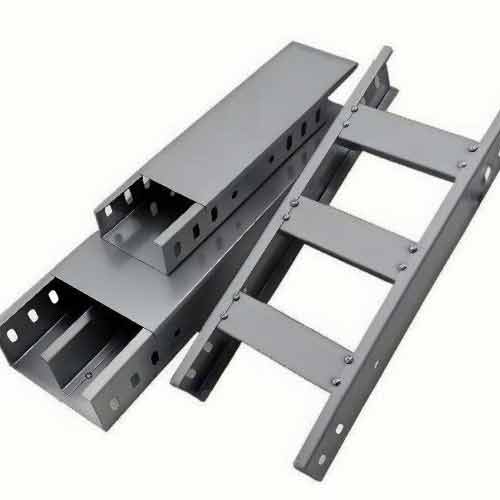
Cable management ladder rack is a structured solution for organizing and supporting cables in data centers, server rooms, and industrial facilities, ensuring neatness, airflow, and easy maintenance. Resembling a ladder with two parallel side rails connected by rungs, it elevates cables off the floor, preventing trip hazards and rodent damage. Made from steel or aluminum, ladder racks come in fixed or adjustable heights, with accessories like trays and dividers for customization. In an era of exponential data growth, cable management ladder racks are critical for scalable, efficient infrastructure.
The design of cable management ladder rack prioritizes airflow and accessibility. The open ladder structure allows cool air to circulate around cables, preventing overheating in server rooms—critical for maintaining IT equipment uptime. Rungs are spaced 12–24 inches apart, supporting bundles of Ethernet, fiber optic, or power cables. Side rails (1.5–3 inches wide) are perforated for weight reduction and mounting. Adjustable racks (with telescoping rails) accommodate varying ceiling heights, while fixed racks suit standard installations. Load capacity ranges from 50–200 lbs per linear foot, depending on material thickness.
Materials for cable management ladder rack balance strength and weight. Steel racks (cold-rolled or galvanized) are heavy-duty, supporting dense cable bundles in industrial settings. Aluminum racks are lightweight and corrosion-resistant, ideal for data centers and outdoor use. Powder-coated finishes (black or white) enhance durability and aesthetics. Some racks include fire-retardant coatings to meet safety codes. Accessories like cable trays (for horizontal runs), J-hooks (for vertical drops), and dividers (for separating cable types) customize the system.
Applications of cable management ladder rack are diverse. Data centers use them to route hundreds of server cables, with ladder racks running along walls or ceilings. Office buildings organize network cables for computers and phones. Industrial facilities manage control cables for machinery. Telecommunication hubs sort fiber optic cables for distribution. Even in residential settings, ladder racks tidy home theater or gaming setups. Their scalability allows adding rungs or trays as cable needs grow.
Advantages of cable management ladder rack over other cable organizers are clear. Unlike cable trays (solid-bottom), ladder racks allow better airflow, reducing cooling costs. They are easier to install than conduit systems, requiring fewer tools. Accessibility is superior—technicians can trace and repair cables without dismantling the entire setup. Cost-wise, they are 30–50% cheaper than custom cable trays. For compliance, they meet ANSI/TIA-942 standards for data center cabling.
Installation and maintenance of cable management ladder rack ensure optimal performance. Installation involves mounting side rails to walls or ceilings with anchors (for concrete) or screws (for wood). Rungs are spaced evenly, with cables bundled using Velcro straps (not zip ties, which damage fibers). Labeling cables at both ends aids identification. Maintenance includes checking for loose rungs, clearing dust, and reorganizing bundles to prevent overcrowding. Damaged sections can be replaced individually. As networks evolve, ladder racks adapt—smart racks with sensors monitor cable temperature and alert for overheating. Cable management ladder rack thus brings order to chaotic wiring.
Previous article:Heavy Duty Wall-Mounted Cable Ladder
Next article:Large-Span Industrial Wiring Cable Ladder for High-Rise Building Wiring
Hot products
Mobile: +86 15369215227
Email:metalproducts2022@163.com
Email:1626757181@qq.com