Product details description
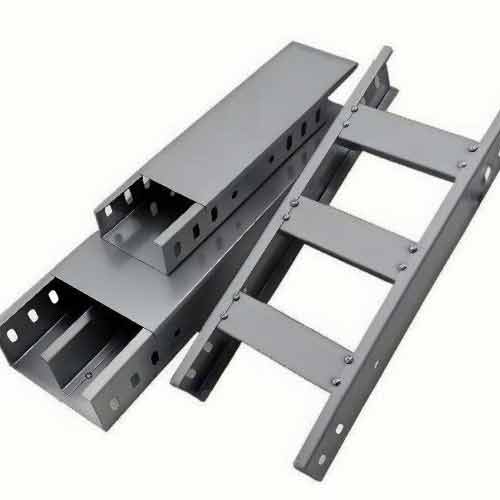
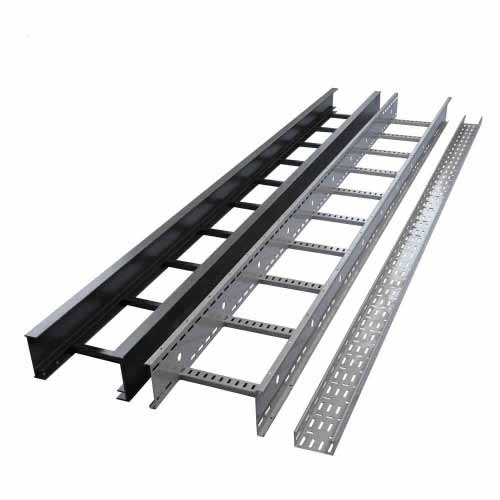
Cable ladders are open-bottom support systems used to route power and
communication cables in industrial and commercial buildings, offering superior
ventilation and ease of access compared to solid-bottom cable trays. The width
of the cable ladder is a critical design parameter that dictates not only how
many cables can be accommodated but also the thermal dissipation capacity and
the structural span between supports. Standard widths range from 4 inches for
light-duty instrumentation to 48 inches or more for heavy power distribution,
but selecting the correct width requires a detailed analysis of cable diameter,
fill ratio, and future expansion needs. A ladder that is too narrow leads to
cable crushing, overheating, and difficulty in maintenance, while one that is
too wide is cost-prohibitive and structurally inefficient.
Cable capacity planning begins with calculating the total cross-sectional
area of all cables to be installed. This includes the insulation thickness, not
just the conductor diameter. For example, a 500 MCM (thousand circular mils)
power cable has a significantly larger outer diameter than a CAT6 data cable.
The National Electrical Code (NEC) and IEC standards specify a maximum fill
ratio (usually 40-50% of the ladder's internal width) to prevent cables from
overheating due to lack of airflow and to allow for "re-pulling" cables during
upgrades. If the ladder width is "W," the usable space is roughly 0.8W
(accounting for the side rails), and the sum of all cable diameters must not
exceed 40% of that usable space.
Airflow optimization is a unique advantage of cable ladders. Unlike
solid-bottom trays, which can trap heat, ladders allow convective cooling.
However, if the ladder is packed too tightly with cables, the "chimney effect"
is lost, and heat builds up. To optimize airflow, cables should be arranged by
heat load: high-voltage power cables (which generate the most heat) are usually
placed on the bottom rung or separated by a vertical barrier from sensitive data
cables (which can be damaged by heat). The width of the ladder must be
sufficient to create "air channels" between cable bundles. For high-density
computing environments (data centers), ladder widths are often oversized (e.g.,
24 inches for a standard run) to ensure that even at 100% capacity, the air
velocity between cables remains high enough to carry away waste heat.
Structural considerations dictate the maximum unsupported span of the
ladder, which is directly related to its width. A wider ladder has a higher
moment of inertia, meaning it can span longer distances between hangers without
sagging. However, wider ladders are also heavier and require heavier-duty
clevises or threaded rods for suspension. The "load class" (Light, Medium,
Heavy, Extra Heavy) defined by the NEMA VE-1 standard correlates width with the
weight of the cable bundle. A 12-inch wide ladder might be rated for 50 lbs/ft,
while a 24-inch wide ladder of the same material thickness might be rated for
150 lbs/ft. Engineers must calculate the "worst-case" load (all trays full of
the heaviest cable type) to select the correct width and material gauge (e.g.,
11-gauge steel vs. 1/4-inch aluminum).
Future-proofing is a major factor in width selection. It is standard
practice to add a 20-30% margin to the calculated cable fill to account for
future additions. In buildings with a 20-year lifecycle, cable density typically
doubles due to technology upgrades (e.g., adding fiber optics, security systems,
or IoT sensors). A ladder filled to 90% capacity today will be overloaded in
five years. Furthermore, the width must accommodate cable bends; cables have a
minimum bending radius (often 10-12 times the cable diameter). If the ladder is
too narrow, cables may be forced to bend too sharply at the rungs, damaging the
insulation. Wider ladders allow for gradual, sweeping bends that maintain signal
integrity for high-speed data cables.
Installation accessories also influence the effective width. Splice plates,
reducers, and leveling brackets take up physical space within the ladder run.
When planning the width, the "transition zones" where the ladder changes width
or direction must be calculated to ensure cables don't get pinched. For outdoor
installations, the width affects wind load; a solid mass of cables in a wide
ladder acts as a sail. Therefore, wider ladders may require more frequent
securing or the use of "wind locks" to prevent oscillation in high winds. By
balancing cable density, thermal management, structural span, and future growth,
the correct cable ladder width ensures a safe, efficient, and scalable
infrastructure for electrical distribution.
Previous article:
How to Prevent Cable Damage in Ladders: Avoiding Overloading, Abrasion, and Water Ingress
Next article:
Custom-Sized Cable Ladder - Tailored to Your Project Layout