Organizing Infrastructure with Efficient Cable Trays
Release time:2026-01-29 Click:11
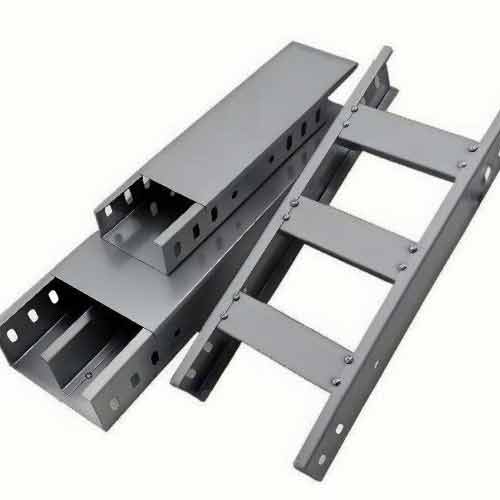
Cable trays are structural systems used to support and manage insulated electrical cables and wiring for power distribution, control, and communication. Functioning as a mechanical alternative to traditional conduit or pipe systems, they provide an open, accessible, and ventilated pathway for cables in commercial, industrial, and data center environments. Made from materials like galvanized steel, aluminum, or stainless steel, cable trays come in various styles—ladder, trough, wire mesh, and solid-bottom—each suited to different cable types, load capacities, and environmental conditions. Their modular design allows for easy expansion and rerouting of cables.
The advantages of using cable trays over enclosed systems are significant. They offer superior heat dissipation, which is critical for power cables that generate heat under load, thereby prolonging cable life and reducing fire risk. Accessibility is another key benefit; cables can be easily added, removed, or inspected without dismantling the system, which is invaluable for maintenance and upgrades. Cable trays also provide excellent flexibility in routing, as they can be installed on ceilings, walls, or under floors, and navigate around obstacles with standard bends and tees. This makes them ideal for complex installations.
Design and installation of a cable tray system require careful planning. Engineers must calculate the total weight of the cables (including future capacity) to select trays with adequate load rating and support spacing. Separation between power and data cables is often mandated by electrical codes to prevent electromagnetic interference. The tray system must be properly grounded for safety. Installation involves assembling straight sections, fittings, and supports, ensuring a continuous, level run with smooth radii at bends to prevent cable insulation damage. Fire barriers and covers may be added where required.
Cable trays are a cornerstone of modern electrical infrastructure, particularly in facilities with high cable density. In data centers, they organize thousands of fiber optic and copper cables in overhead or under-floor systems. In industrial plants, they withstand harsh environments while carrying critical control wiring. Their use promotes safety by reducing trip hazards from loose cables and containing them in an organized manner. As technology evolves and cable requirements grow, the scalable and adaptable nature of cable tray systems ensures they remain a future-proof solution for efficient cable management.
Previous article:Organizing Infrastructure with Perforated Cable Trays
Next article:Organized Electrical Systems with a Robust Cable Tray
Hot products
Mobile: +86 15369215227
Email:metalproducts2022@163.com
Email:1626757181@qq.com