Organizing Infrastructure with Perforated Cable Trays
Release time:2026-01-27 Click:19
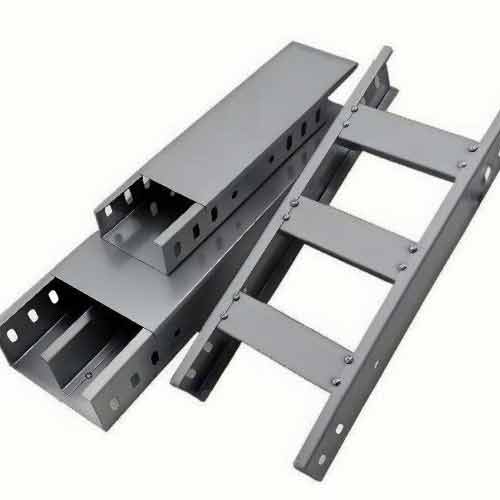
Perforated cable trays are open, ladder-like support systems made from sheet metal—typically steel, aluminum, or stainless steel—punched with a uniform pattern of holes. They are designed to securely route and manage electrical cables, data communication lines, and pneumatic or hydraulic hoses in commercial, industrial, and data center environments. The perforations provide crucial benefits: they significantly reduce the tray's weight, improve ventilation to dissipate heat from cables, allow dust and debris to fall through (preventing accumulation), and facilitate easy access for cable tie-downs at multiple points along the tray's length.
The structural design of perforated cable trays offers excellent strength-to-weight ratios, allowing them to span longer distances between supports compared to solid-bottom trays. They are available in various widths, depths, and side rail heights to accommodate different cable volumes and bending radii. The installation is modular, using fittings like elbows, tees, and crosses to create flexible routing paths overhead, underfloor, or along walls. This adaptability makes them indispensable in complex facilities like manufacturing plants, where machinery layouts and cable runs frequently change, as cables can be added, removed, or rerouted with minimal disruption.
Safety and compliance are paramount. Perforated cable trays provide a grounded metallic pathway, which can be important for grounding shielded cables and mitigating electromagnetic interference (EMI). They keep cables elevated and organized, protecting them from water, physical damage, and contamination. In hazardous locations, specially designed trays with increased structural integrity and proper material certifications are used. Regular inspections ensure that cable loads do not exceed the tray's rated capacity and that the system remains secure, supporting uninterrupted power and data flow critical to operations.
Advancements in materials and coatings are enhancing the performance and lifespan of perforated cable trays. Galvanization, powder coating, or hot-dip galvanizing after fabrication provides superior corrosion resistance. For data centers, trays with low-smoke zero-halogen coatings improve fire safety. Emerging trends include the integration of cable management accessories like divider clips and labeling systems, and the use of computational modeling to design optimized tray layouts for airflow and cooling. As the backbone of modern electrical and data infrastructure, perforated cable trays offer a reliable, scalable, and efficient solution for managing the ever-growing web of cables that power our world.
Previous article:The Benefit of Fiberglass Cable Tray
Next article:Organizing Infrastructure with Efficient Cable Trays
Hot products
Mobile: +86 15369215227
Email:metalproducts2022@163.com
Email:1626757181@qq.com