Trough-Type Cable Ladder vs. Wire Mesh Tray: A Comparative Analysis
Release time:2026-01-10 Click:28
Efficient cable management in industrial, commercial, and data center environments relies heavily on robust support systems. Two prominent options are the trough-type cable ladder and the wire mesh tray. Both serve the fundamental purpose of supporting cables and bundles, but their distinct designs lead to different strengths and weaknesses, making selection dependent on specific application requirements. A comparative analysis reveals key differences in structure, load capacity, ventilation, and suitability for various cable types.
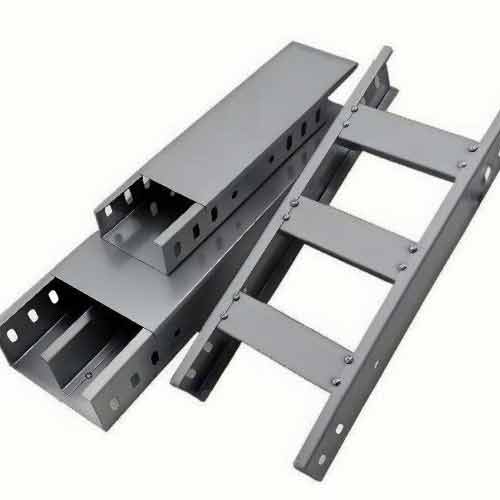
The trough-type cable ladder, often simply called cable ladder, features a longitudinal rail system with rungs (or steps) connecting two side rails, forming a ladder-like structure. It is typically constructed from steel, aluminum, or fiberglass reinforced plastic (FRP). The open-top channel or "trough" created by the rails and rungs allows for easy cable laying and identification. Its primary advantage lies in exceptional load-bearing capacity, making it ideal for supporting heavy, large-diameter, or numerous cables over long spans without significant sag. The sturdy construction also provides good mechanical protection against impacts. However, the enclosed trough design offers limited ventilation compared to mesh trays.
In contrast, the wire mesh tray consists of a series of longitudinal wires connected by transverse wires, forming a grid-like or basket-like structure. Like ladders, they are available in various materials including steel (often pre-galvanized or hot-dip galvanized), stainless steel, and aluminum. The open grid design provides excellent ventilation and drainage, which is beneficial for heat dissipation from power cables and preventing accumulation of dust or moisture. Wire mesh trays are generally lighter than comparable ladder sections and more flexible for routing around obstacles. However, their load capacity is typically lower than that of cable ladders, and they may offer less protection against physical damage.
Comparing their applications highlights their niches. Cable ladders excel in heavy industrial settings, power distribution networks, utility tunnels, and outdoor installations where high load capacity and mechanical robustness are paramount. They are well-suited for large power cables and bundled conduits. Wire mesh trays find favor in data centers, telecommunications rooms, light commercial buildings, and areas with moderate cable loads where ventilation, ease of installation, and frequent cable additions/changes are prioritized. Their open design simplifies tracing and modifying cable runs. Fire safety regulations regarding flame spread and cable bundling density may also influence the choice.
Ultimately, the selection between a trough-type cable ladder and a wire mesh tray depends on a careful evaluation of project needs. Consider factors such as expected cable load (weight and volume), cable types (power vs. data), required span lengths, environmental conditions (indoor/outdoor, corrosive), need for ventilation, potential for physical damage, and future scalability. Often, both systems might coexist in a single facility, with ladders used for main power feeds and mesh trays for data and communication cabling in controlled environments. Understanding their comparative attributes ensures the optimal choice for safe, organized, and efficient cable management.
Previous article:Organized Cabling with Cable Tray
Next article:Cable Tray: The Organizational Backbone for Wiring Systems
Hot products
Mobile: +86 15369215227
Email:metalproducts2022@163.com
Email:1626757181@qq.com